
DEKTON FOR YOUR HOME, DEKTON COVERINGS
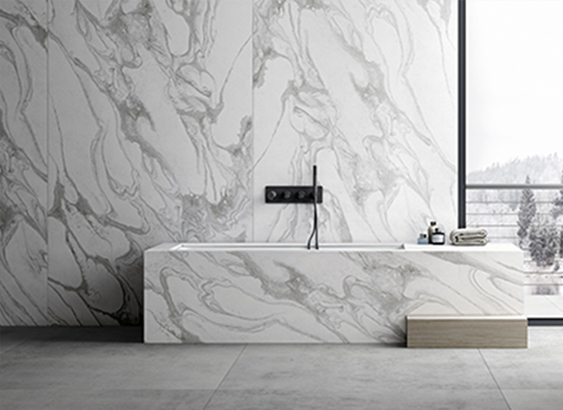
Innovation and design to cover exterior and interior walls.
Resistant and spacious spaces with visual continuity, thanks to minimal joints and large-format tables.
Advantages of Dekton coverings
• Highly scratch resistant, cookware does not scratch Dekton
• Resistance to stains, Dekton countertops resist the most difficult stains, allowing easy cleaning and maintenance.
• Resistance to fire and heat, Dekton resists high temperatures avoiding damage to its Surface
• Reduced water absorption. Dekton's almost zero porosity prevents the absorption of water and other liquids, thus facilitating cleaning.
• Resistant to abrasion, Dekton has enormous resistance to abrasion, ideal for work surfaces with intense use.
• High impact resistance, high resistance to daily impacts and knocks
The Dekton collections adapt to all styles of decoration
Natural style
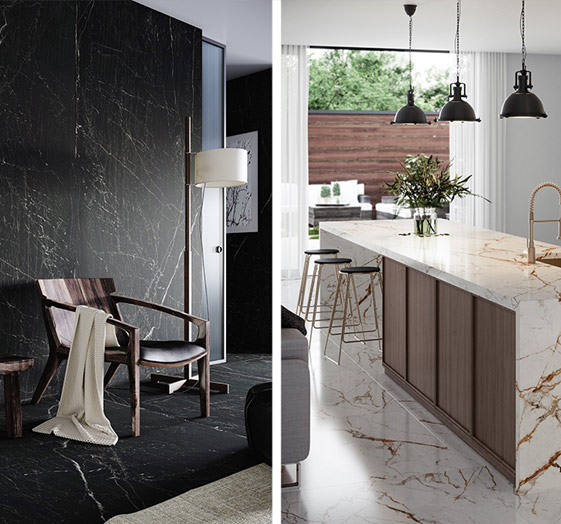
The beauty of natural stone, the protagonist of the Stonika collection, creates timeless and sophisticated spaces. Are you looking for a bright environment? Olimpo, which reproduces Carrara marble in a hyper-realistic way; Bergen, with marked greyish veining on a white background; or Taga and Arga, which evoke the quartzite of the Taj Mahal, are a sure hit.
Industrial style
The aesthetic of urban lofts finds its perfect ally in the Industrial collection. Like cement, in its most varied forms: classic and uniform in Kreta; worn on Oryx; obscured in Laos; or bleached in Lunar. Radium reproduces rusted and acid-treated steel; Nilium, in white, gray, and silver; and Trillium, an intense mix of colors inspired by volcanic stones that evoke the effects of rust.
Easy maintenance and cleaning with a 25-year guarantee
• Easy-to-maintain coverings, easy to clean: just wipe with a damp cloth with neutral soap and water}
• Coatings with a 25-year guarantee, surfaces with a 25-year, certified, and written guarantee.
The importance of having adequate equipment to cut dekton and porcelain
Why do products such as Dekton need special/different tools than those that are used for cutting granite and marble?
Material hardness is the key to understanding why you need different tools to fabricate Dekton. The material has a
The cutting process requires trimming the edges to release tensions. Then you have to follow cutting recommendations, which include using plenty of water, the proper speed, feed rate, etc. Once you follow the rules, it’s a piece of cake.


In this sense, Dekton’s edge is very easy to work with since the material is very homogeneous, and it is easy to get very good results. Any fabricator can do it well on the first attempt.
What are some common mistakes that fabricators are making when it comes to cutting this material? And, what are some common mistakes with doing edging or doing sinkholes or something?
The main mistake is trying to fabricate Dekton as if it was a granite or quartz composite. You will fail if you use the same tools, speed rates, and so on. Another common mistake is trying to cut Dekton in uneven support. It is a common source of problems too.
Sometimes people ask about what machine is best to cut Dekton. I believe the key is not the machine but the tools and proper maintenance. I have seen people with very modest equipment doing amazing things and the other way around.
7 Keys for Cutting Ultra-Compact and Sintered Dekton and Porcelain Materials


It may seem too simple or too intuitive to matter, but less than adequate water AND hoses positioned incorrectly is the most common error causing headaches among cutting these materials.
One of the more overlooked aspects of successful cutting is, to the degree that your table is not level in the horizontal plane, vibrations will occur. This unevenness can result in chipping and likely breaking the edge of your slab.
As cliche, as it may sound, choosing the right blade for the material you are processing, is critical.
While each manufacturer of ultra-compact and sintered porcelain materials may, or may not have tensioning strips built into the perimeters of each slab, if they are not removed before cutting, the slab is at higher risk of cracking or breaking.
Using the same feed rate and RPMs you may be accustomed to when cutting other materials can be a recipe for trouble. Unlike fabricating more common materials such as marble and granite, we’ve seen the most success cutting ultra-compact and sintered porcelain materials when following a systemized approach is used.
While plunge cutting tends to be of little concern for most sawyers when cutting ultra-compact and sintered porcelain materials it can pose big problems resulting in cracking or breaking your slab.
Projects requiring a sink cut-out can be an obstacle many fabricators dread. Since we already know plunging is not the ideal way to go about this, what are your options? When preparing a sink cut-out, it is advised to drill each of the four corners with a 1/2” core bit before to start initiating cutting.
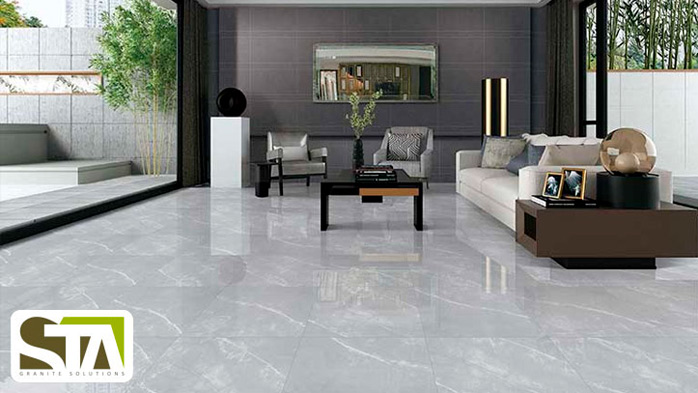
PORCELAIN FOR YOUR HOME, TILES
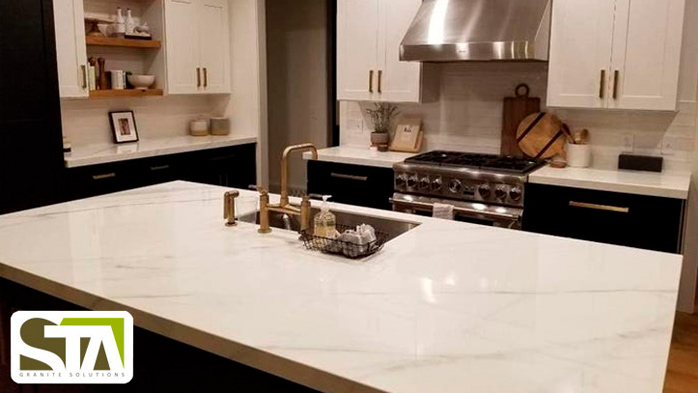
PORCELAIN FOR YOUR HOME, COUNTERTOPS FOR YOUR KITCHEN
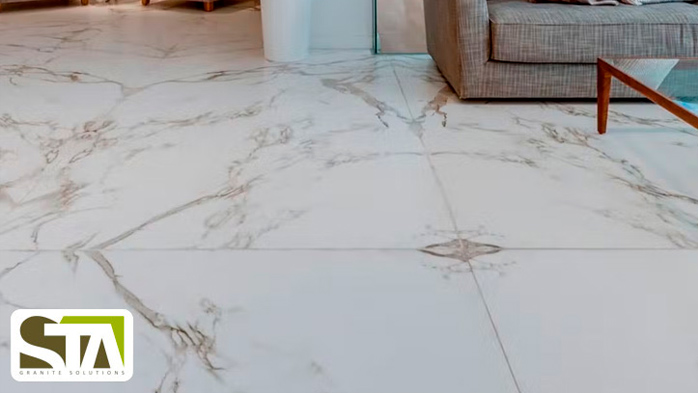
DEKTON FOR YOUR HOME, FLOORS, AND PAVEMENTS
- 1
- 2
- 3
- 4
- 5
- 6
- 7
- 8
- 9
- 10
- 11
- 12
- 13
- 14
- 15
- 16
- 17
- 18
- 19
- 20
- 21
- 22
- 23
- 24
- 25
- 26
- 27
- 28
- 29
- 30
- 31
- 32
- 33
- 34

