
THE MOST POPULAR QUARTZ COUNTERTOP COLORS OF 2023 PART 1
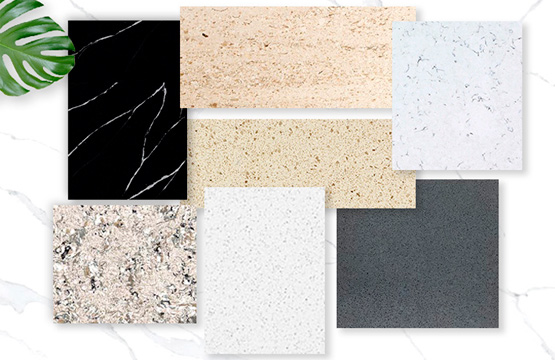
Quartz is a mineral composed mainly of silicon dioxide (SiO2). It is one of the most abundant minerals in the Earth's crust and is found in a variety of igneous, sedimentary, and metamorphic rocks. Quartz is characterized by its hardness, transparency or translucency, and its crystalline appearance.
In the field of countertops and surfaces for construction and interior design, quartz is also used to refer to synthetic quartz products, known as composite quartz or engineered quartz. These products are made from a mixture of approximately 90-95% natural quartz particles and 5-10% resins and pigments, which are put through a manufacturing process to create a strong, durable surface.
In summary, quartz is a natural mineral composed mainly of silicon dioxide. In the context of countertops and interior design surfaces, quartz also refers to synthetic quartz or engineered quartz products, which are made from a mixture of natural quartz and resins to create a strong and aesthetically pleasing surface.
In the field of countertops and surfaces for construction and interior design, quartz is also used to refer to synthetic quartz products, known as composite quartz or engineered quartz. These products are made from a mixture of approximately 90-95% natural quartz particles and 5-10% resins and pigments, which are put through a manufacturing process to create a strong, durable surface.
In summary, quartz is a natural mineral composed mainly of silicon dioxide. In the context of countertops and interior design surfaces, quartz also refers to synthetic quartz or engineered quartz products, which are made from a mixture of natural quartz and resins to create a strong and aesthetically pleasing surface.
Best colors for quartz countertops
The choice of quartz countertop color will depend on your personal preferences, the design style of your kitchen or bathroom, and how you want it to blend in with the rest of your décor. However, some popular and versatile colors for quartz countertops include:
Pure White: White and light tones are classic and timeless. Pure white provides a fresh, clean, and bright look that blends well with different design styles.
Neutral tones: Neutral tones like light gray, beige, or taupe offer a stylish and versatile look. These colors adapt well to different styles and allow easy combination with other decorative elements.
Dark Grey: Dark gray tones, such as anthracite or graphite, can bring a sophisticated and modern look to the kitchen. These colors are ideal for creating visual contrast and highlighting other design elements.
Black: A deep, solid black color can add a touch of elegance and drama to the kitchen. Black is especially effective in spaces with adequate lighting and where a modern and avant-garde style is sought.
Natural Stone Shades: Some quartz colors are designed to mimic the appearance of natural stones such as marble or granite. These colors offer a sleek, luxurious aesthetic without the maintenance concerns associated with natural stone.
The choice of quartz countertop color will depend on your personal preferences, the design style of your kitchen or bathroom, and how you want it to blend in with the rest of your décor. However, some popular and versatile colors for quartz countertops include:
Pure White: White and light tones are classic and timeless. Pure white provides a fresh, clean, and bright look that blends well with different design styles.
Neutral tones: Neutral tones like light gray, beige, or taupe offer a stylish and versatile look. These colors adapt well to different styles and allow easy combination with other decorative elements.
Dark Grey: Dark gray tones, such as anthracite or graphite, can bring a sophisticated and modern look to the kitchen. These colors are ideal for creating visual contrast and highlighting other design elements.
Black: A deep, solid black color can add a touch of elegance and drama to the kitchen. Black is especially effective in spaces with adequate lighting and where a modern and avant-garde style is sought.
Natural Stone Shades: Some quartz colors are designed to mimic the appearance of natural stones such as marble or granite. These colors offer a sleek, luxurious aesthetic without the maintenance concerns associated with natural stone.
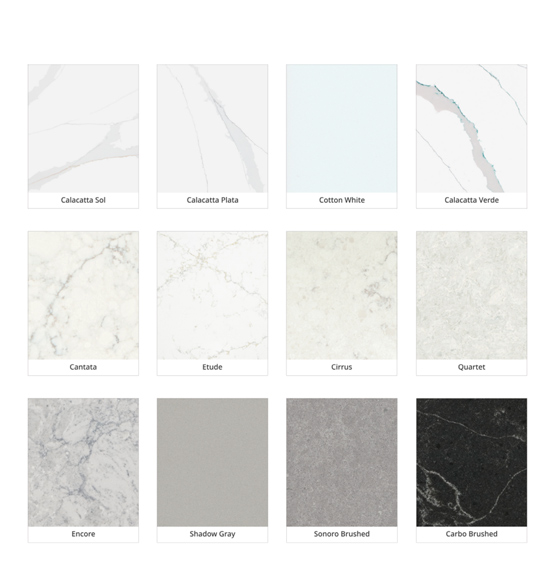
Remember that your choice of countertop color should complement your kitchen or bathroom color palette, and consider the amount of natural light entering the space. It's also a good idea to get samples of the colors you're interested in and see how they look in your environment before making a final decision.
The importance of having adequate equipment to cut dekton and porcelain
Dekton, among other alternative stone materials, continues to grow in popularity for applications such as countertops, flooring, and both interior and exterior wall cladding. Being a hard dense product, it is crucial to use appropriate tooling during the fabrication process. Carlos Sustaita, production director for STA Granite, provides several important tips of advice for those working with compact sintered stone.
Why do products such as Dekton need special/different tools than those that are used for cutting granite and marble?
Material hardness is the key to understanding why you need different tools to fabricate Dekton. The material has a
very high density (ultra-compact), which means that if you don’t use proper tools, you can either break the tool or the material or even worse, damage the machinery.
The cutting process requires trimming the edges to release tensions. Then you have to follow cutting recommendations, which include using plenty of water, the proper speed, feed rate, etc. Once you follow the rules, it’s a piece of cake.


When doing edging on Dekton, What is the difference in the process compared to a natural stone?
In this sense, Dekton’s edge is very easy to work with since the material is very homogeneous, and it is easy to get very good results. Any fabricator can do it well on the first attempt.
What are some common mistakes that fabricators are making when it comes to cutting this material? And, what are some common mistakes with doing edging or doing sinkholes or something?
The main mistake is trying to fabricate Dekton as if it was a granite or quartz composite. You will fail if you use the same tools, speed rates, and so on. Another common mistake is trying to cut Dekton in uneven support. It is a common source of problems too.
Sometimes people ask about what machine is best to cut Dekton. I believe the key is not the machine but the tools and proper maintenance. I have seen people with very modest equipment doing amazing things and the other way around.
7 Keys for Cutting Ultra-Compact and Sintered Dekton and Porcelain Materials


1. Water
It may seem too simple or too intuitive to matter, but less than adequate water AND hoses positioned incorrectly is the most common error causing headaches among cutting these materials.
It may seem too simple or too intuitive to matter, but less than adequate water AND hoses positioned incorrectly is the most common error causing headaches among cutting these materials.
2. Check your table level
One of the more overlooked aspects of successful cutting is, to the degree that your table is not level in the horizontal plane, vibrations will occur. This unevenness can result in chipping and likely breaking the edge of your slab.
One of the more overlooked aspects of successful cutting is, to the degree that your table is not level in the horizontal plane, vibrations will occur. This unevenness can result in chipping and likely breaking the edge of your slab.
3. Buy the right blade
As cliche, as it may sound, choosing the right blade for the material you are processing, is critical.
As cliche, as it may sound, choosing the right blade for the material you are processing, is critical.
4. Removing tensioning strips
While each manufacturer of ultra-compact and sintered porcelain materials may, or may not have tensioning strips built into the perimeters of each slab, if they are not removed before cutting, the slab is at higher risk of cracking or breaking.
While each manufacturer of ultra-compact and sintered porcelain materials may, or may not have tensioning strips built into the perimeters of each slab, if they are not removed before cutting, the slab is at higher risk of cracking or breaking.
5. Feed rate and RPMs
Using the same feed rate and RPMs you may be accustomed to when cutting other materials can be a recipe for trouble. Unlike fabricating more common materials such as marble and granite, we’ve seen the most success cutting ultra-compact and sintered porcelain materials when following a systemized approach is used.
Using the same feed rate and RPMs you may be accustomed to when cutting other materials can be a recipe for trouble. Unlike fabricating more common materials such as marble and granite, we’ve seen the most success cutting ultra-compact and sintered porcelain materials when following a systemized approach is used.
6. Avoiding Plunging
While plunge cutting tends to be of little concern for most sawyers when cutting ultra-compact and sintered porcelain materials it can pose big problems resulting in cracking or breaking your slab.
While plunge cutting tends to be of little concern for most sawyers when cutting ultra-compact and sintered porcelain materials it can pose big problems resulting in cracking or breaking your slab.
7. Cutting Sinks
Projects requiring a sink cut-out can be an obstacle many fabricators dread. Since we already know plunging is not the ideal way to go about this, what are your options? When preparing a sink cut-out, it is advised to drill each of the four corners with a 1/2” core bit before to start initiating cutting.
Projects requiring a sink cut-out can be an obstacle many fabricators dread. Since we already know plunging is not the ideal way to go about this, what are your options? When preparing a sink cut-out, it is advised to drill each of the four corners with a 1/2” core bit before to start initiating cutting.
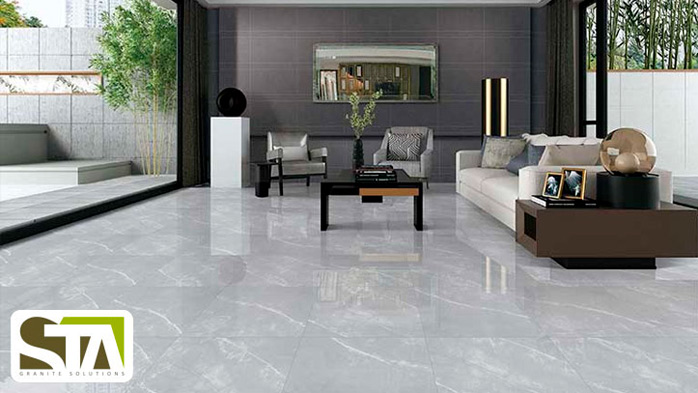
PORCELAIN FOR YOUR HOME, TILES
Ceramic tiles are thin pieces made of clay, silica, fluxes, dyes, and other raw materials to create floors and/or walls.…
Read More
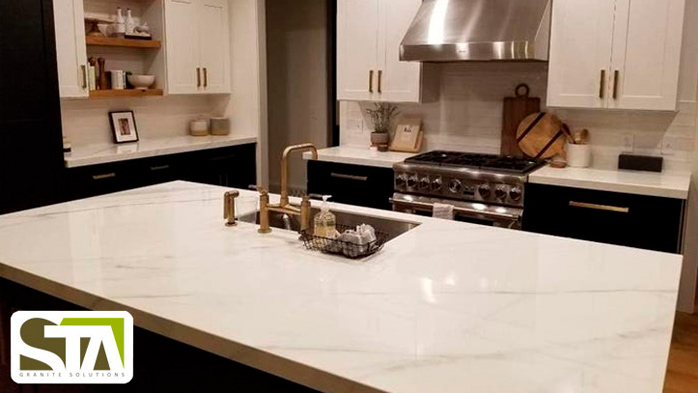
PORCELAIN FOR YOUR HOME, COUNTERTOPS FOR YOUR KITCHEN
Due to its great demand, porcelain kitchen countertops are becoming more sophisticated and have greater hardness
Read More
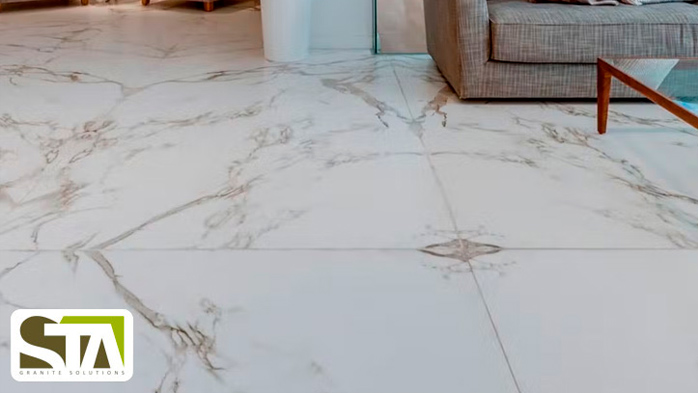
DEKTON FOR YOUR HOME, FLOORS, AND PAVEMENTS
Large format and minimal joints. Dekton allows you to create outdoor and indoor floors with great visual continuity and maximum…
Read More
- 1
- 2
- 3
- 4
- 5
- 6
- 7
- 8
- 9
- 10
- 11
- 12
- 13
- 14
- 15
- 16
- 17
- 18
- 19
- 20
- 21
- 22
- 23
- 24
- 25
- 26
- 27
- 28
- 29
- 30
- 31
- 32
- 33
- 34

