
PROPERTIES FOR AN EXCELLENT QUARTZ COUNTERTOP PART 1
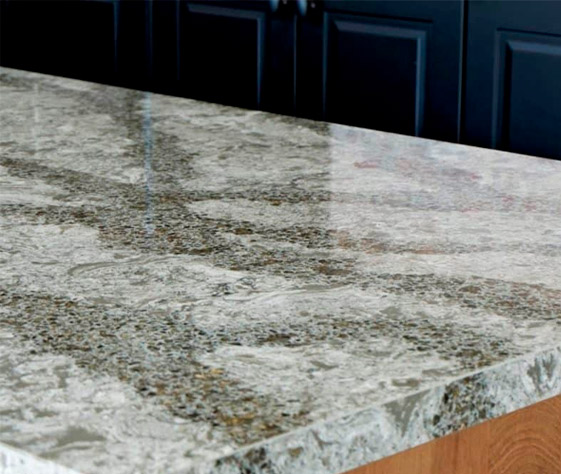
The Quartz is the name of a material that continues to confuse people. The term quartz can mean different things to various people. Knowing a bit about quartz helps us to understand some key differences in the way the term is used. In this art,icle we will take a look at various kinds of "quartz". As we do, we will make an effort to illuminate some of the differences between the materials the term represents.
The mineral quartz is a very hard material that measures a 7 on the Mohs scale of mineral hardness. For this re, as it is very durable. And, because engineered quartz contains a significant amount of the mineral quartz, it is referred to simply as a "quartz" countertop. So what are the properties of engineered quartz countertops?
One of the properties of engineered quartz surfaces is that they are hard like the mineral of which they are composed. And even though engineered quartz countertops contain other materials, those materials are also hard. So overall, engineered quartz is scratch resistant because of its hardness.
Fabricating Engineered Quartz Countertops
Engineered quartz fabrication involseveralr of specific techniques and tools designed for working with the material. Let's look at a few of them now.
Whether you classify it as a technique or use of a tool, the first that we will consider is using diamond polishing pads designed for engineered quartz surfaces. When engineered quartz is being polished, the bond in the polishing pad can heat up and discolor the surface of the engineered quartz surfaces. Using polishing pads that are mof of engineered quartz according to the instructions from the manufacturer will give you stain-free free polish.
Cutting engineered quartz is also a facet of fabrication that takes some specific tool usage. There are diamond blades designed for cutting engineered quartz surfaces. Using these blades provides clean cuts on hard materials. These will also last longer than blades not made for cutting engineered quartz surfaces.
And those are not the only tools designed specifically for use on material hard like engineered quartz.
• Turbo Blades
• Core Bits
• Side Cut Blades
• Quad Turbo Blades
Many of the tools used for working with engineered quartz are available through distributors you can find on this website. You can also learn about the tools here.
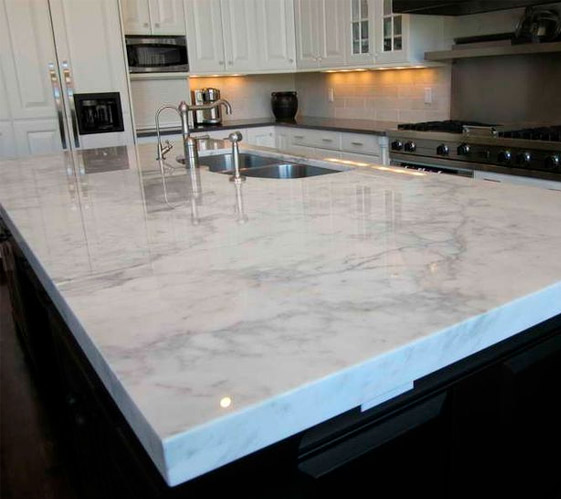
The importance of having adequate equipment to cut dekton and porcelain
Why do products such as Dekton need special/different tools than those that are used for cutting granite and marble?
Material hardness is the key to understanding why you need different tools to fabricate Dekton. The material has a
The cutting process requires trimming the edges to release tensions. Then you have to follow cutting recommendations, which include using plenty of water, the proper speed, feed rate, etc. Once you follow the rules, it’s a piece of cake.


In this sense, Dekton’s edge is very easy to work with since the material is very homogeneous, and it is easy to get very good results. Any fabricator can do it well on the first attempt.
What are some common mistakes that fabricators are making when it comes to cutting this material? And, what are some common mistakes with doing edging or doing sinkholes or something?
The main mistake is trying to fabricate Dekton as if it was a granite or quartz composite. You will fail if you use the same tools, speed rates, and so on. Another common mistake is trying to cut Dekton in uneven support. It is a common source of problems too.
Sometimes people ask about what machine is best to cut Dekton. I believe the key is not the machine but the tools and proper maintenance. I have seen people with very modest equipment doing amazing things and the other way around.
7 Keys for Cutting Ultra-Compact and Sintered Dekton and Porcelain Materials


It may seem too simple or too intuitive to matter, but less than adequate water AND hoses positioned incorrectly is the most common error causing headaches among cutting these materials.
One of the more overlooked aspects of successful cutting is, to the degree that your table is not level in the horizontal plane, vibrations will occur. This unevenness can result in chipping and likely breaking the edge of your slab.
As cliche, as it may sound, choosing the right blade for the material you are processing, is critical.
While each manufacturer of ultra-compact and sintered porcelain materials may, or may not have tensioning strips built into the perimeters of each slab, if they are not removed before cutting, the slab is at higher risk of cracking or breaking.
Using the same feed rate and RPMs you may be accustomed to when cutting other materials can be a recipe for trouble. Unlike fabricating more common materials such as marble and granite, we’ve seen the most success cutting ultra-compact and sintered porcelain materials when following a systemized approach is used.
While plunge cutting tends to be of little concern for most sawyers when cutting ultra-compact and sintered porcelain materials it can pose big problems resulting in cracking or breaking your slab.
Projects requiring a sink cut-out can be an obstacle many fabricators dread. Since we already know plunging is not the ideal way to go about this, what are your options? When preparing a sink cut-out, it is advised to drill each of the four corners with a 1/2” core bit before to start initiating cutting.
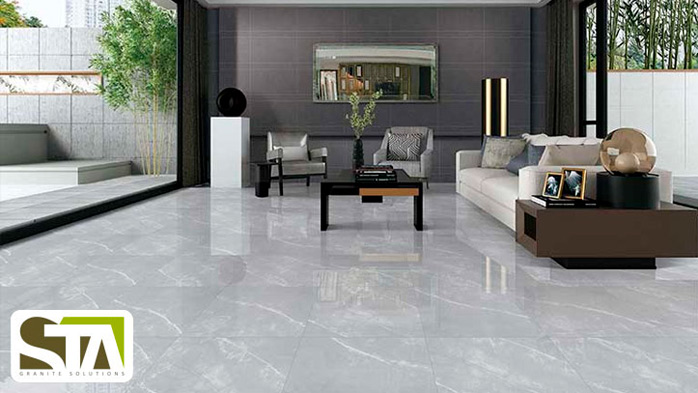
PORCELAIN FOR YOUR HOME, TILES
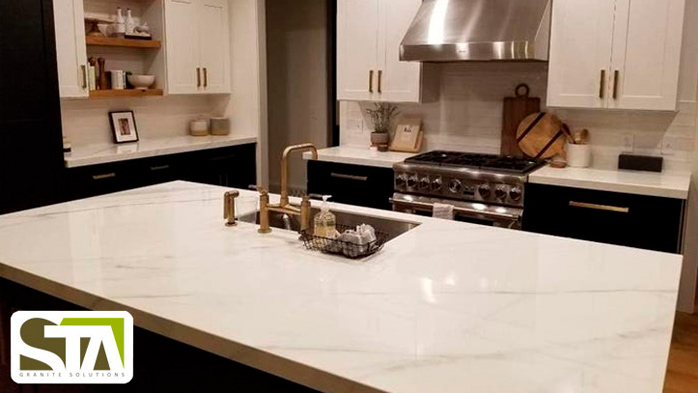
PORCELAIN FOR YOUR HOME, COUNTERTOPS FOR YOUR KITCHEN
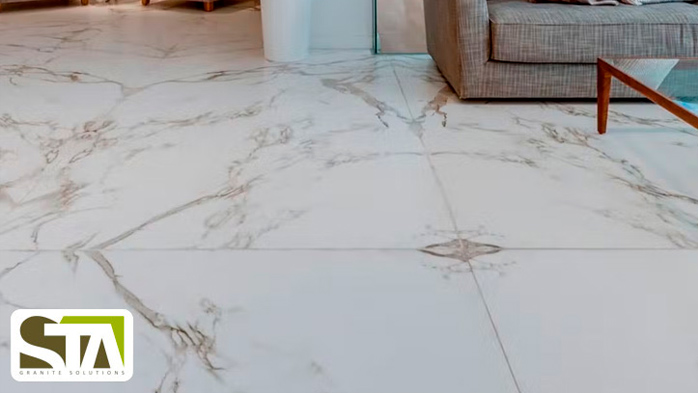
DEKTON FOR YOUR HOME, FLOORS, AND PAVEMENTS
- 1
- 2
- 3
- 4
- 5
- 6
- 7
- 8
- 9
- 10
- 11
- 12
- 13
- 14
- 15
- 16
- 17
- 18
- 19
- 20
- 21
- 22
- 23
- 24
- 25
- 26
- 27
- 28
- 29
- 30
- 31
- 32
- 33
- 34

